When we think of a line we get the idea of two points connecting in a solid or thin manner. A line can be horizontal, vertical, diagonal, or curved. Its direction can create an effect in a room. It can make a room appear taller or bring the ceiling lower. It also makes a room appear larger than it actually is. Line allows us to creates illusions.
Lines in a room can also influence our mood or it could give us a feeling of movement. Lines that are jagged can give a room a feeling of fierceness. A room with many lines may appear busy, while a room with few lines may appear empty. But these lines do not have to be real.
Lines could be implied between the two connecting points, like along surfaces. Finally, we use lines to help us create a focal point and a sense of rhythm or pattern. So in your decorating and designing efforts, don’t forget what the element of lines can do for your room.
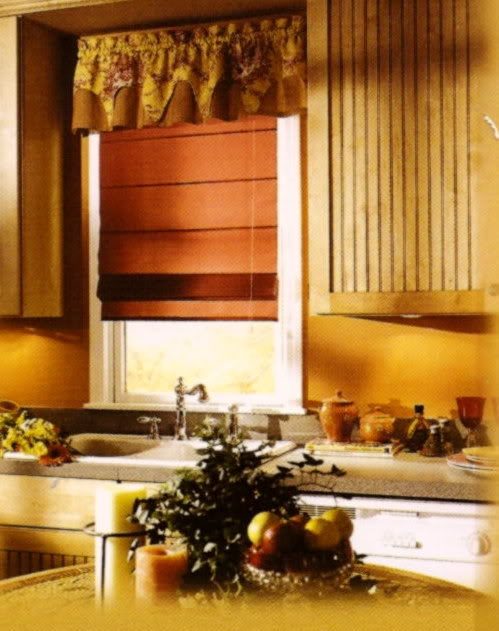
In the above picture, lines are obvious along windows, plank paneling, textile, etc. Lines can also be seen in the patterns of wall coverings, at doorways, flooring, and flooring. Lines can also be seen in furniture, patterned wall coverings, textiles, arches, columns, and furnishing.
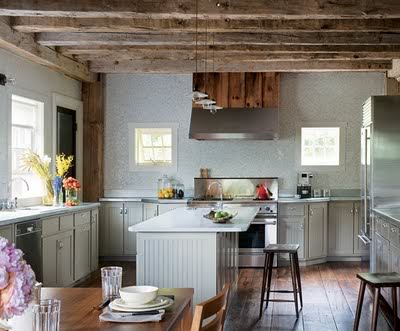
The ceiling in the above room has solid and horizontal lines. Horizontal lines tend to move the eyes from side to side; this gives us a strong feeling. The ceiling in this room is made up of a wooden planks that are repeated horizontally in the ceiling. This combine with the thinner lines repeated throughout the room helps create an informal kitchen, and one that gives us a feeling that even men would like to cook in this kitchen. However, you should use strong horizontal lines to a minimum as they tend to create a feeling of restlessness.
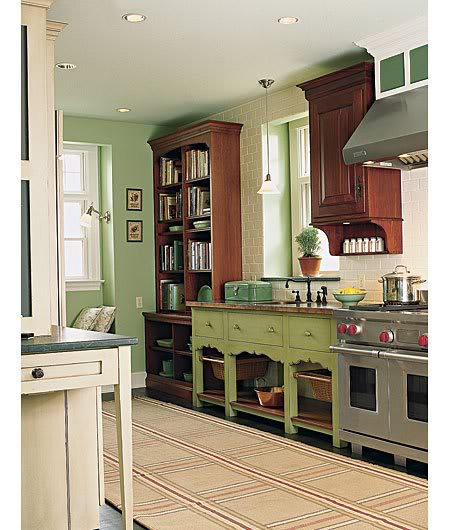
The vertical lines along the cabinets, shelves and windows help draw the eyes up and down in the above picture of a kitchen. These lines take a small room that would otherwise end looking opposite to the feeling you are getting from this room. The horizontal lines in this room help produce a feeling of alertness, suggest stability, dignity, and formality.

Diagonal lines are used less in kitchens. They are more useful in places that have a lot of movement such as entry halls, because they visually suggest and promote rapid movement. They can be quite disturbing, so you should check the wallpaper and fabrics before you buy them (remember lines can implied). In the above picture, the diagonal lines are only used in a section of the cabinet.
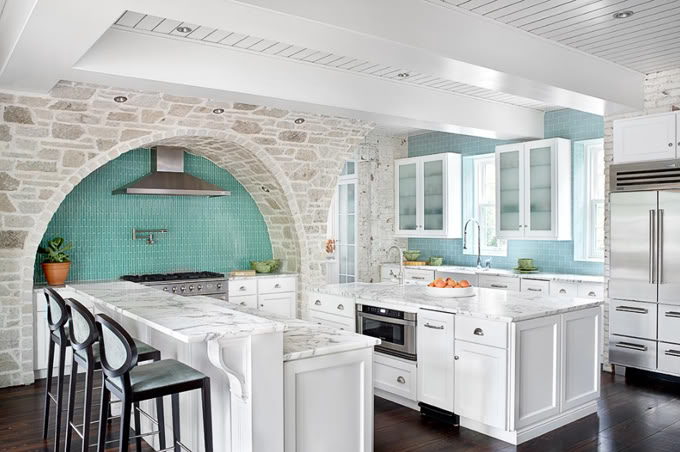
Most large curves are done in a way to create a focal point or to create a feeling of excitement. Curves can also make a room look natural and feminine. Small curves, as seen in the chairs, are gentle.
All Photo courtesy www.photobucket.com
.